
Roof leaking? What to do right now, step by step
Catch the water, make the electrics safe and stay off the roof. Then call me, 24/7: I'm usually with you in about an hour.

No call-out charge, day or night
What to do when your roof is leaking: catch the water, switch off the power to any wet light fitting, move your things, and call a roofer instead of climbing up yourself. These steps take minutes and limit the damage while the leak waits to be fixed.
What to do right now, step by step
Work through these in order. The first two matter most: water does the most harm in a ceiling or near the electrics.
Whatever you do, stay off the roof. Wet tiles are slippery and old ones crack underfoot. Falls from height are the most common kind of fatal accident at work in Great Britain: 31 of the 126 worker deaths HSE recorded in 2025/26 (HSE, provisional figures). Look from the ground instead, and keep people away from anything loose.
Catch the water
Put a bucket under each drip, on a towel to stop splashes.
Make the electrics safe
If water is near a light, switch or socket, switch off at the fuse box and don't touch anything wet. Have an electrician check it before you switch back on.
Move your things
Move furniture, rugs and electronics out of the way, or cover them with plastic sheeting.
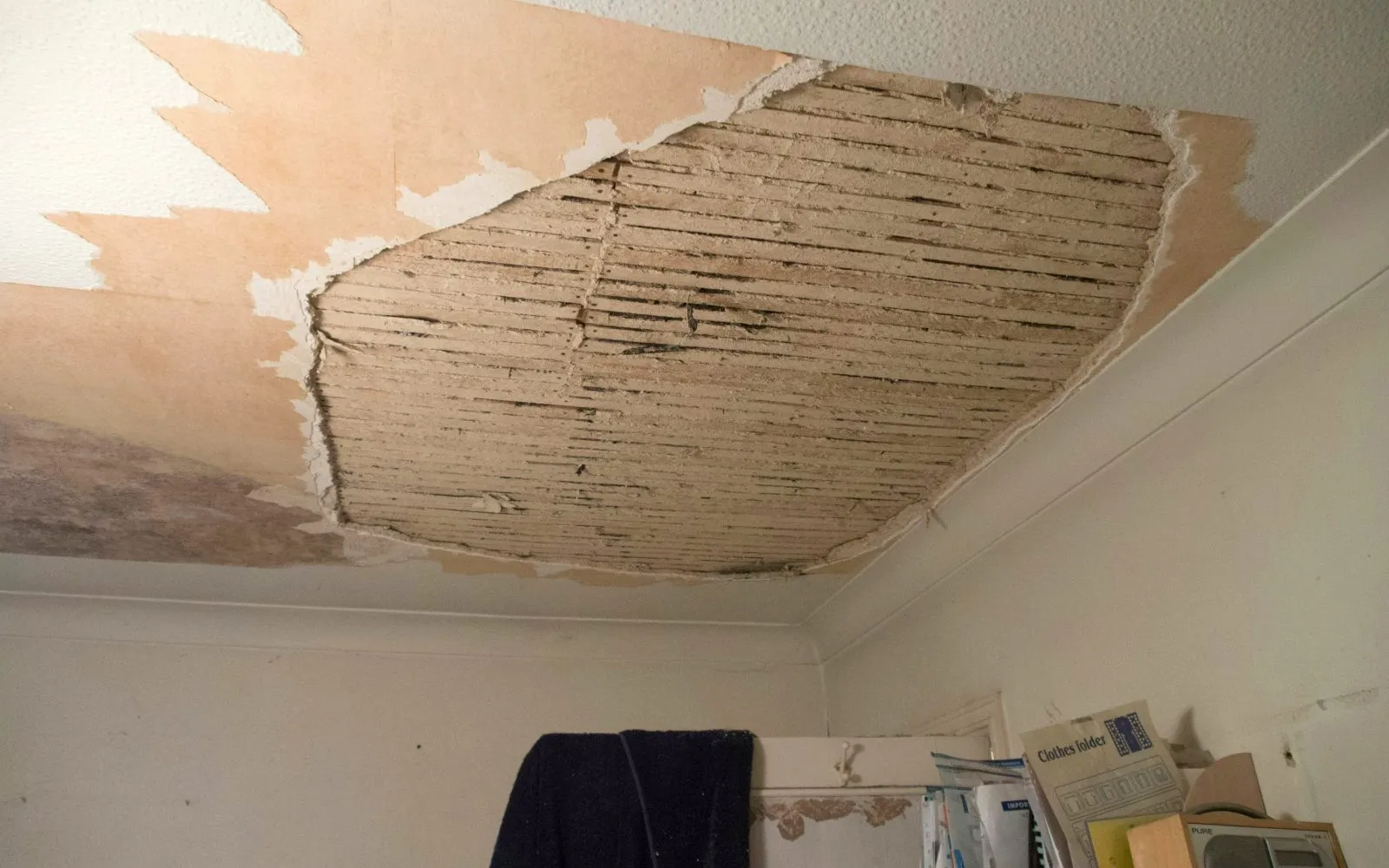
Deal with a bulging ceiling
If water is pooling above the plaster, stand to one side and make a small hole at the lowest point over a bucket. If it's sagging badly, keep everyone out of the room.
Check the loft, if it's safe
With a torch, stepping only on the joists, find where the water comes through and put a tray under it.
Take photos
Photograph the ceiling, the loft and anything you can see on the roof from the ground. Your insurer may want them, and they help me too.
Call a roofer
Call, rather than email, if water is coming in now.
What the stain can tell you about where the leak is
Water rarely drips straight down from the hole. It runs along the felt and the rafters first, and the Department for Communities' roof maintenance guidance warns that "the internal sign of water penetration is often far removed from the defect" (Department for Communities, roof coverings). Still, where the stain shows narrows things down:
- On or beside the chimney breast: usually the chimney, its flashing or its flaunching. See chimney repairs.
- Under a flat-roofed extension or garage: a leak in the covering itself, often at a split, joint or edge.
- Where a sloping roof meets a wall: often the flashing along that joint.
- Only in heavy, windy rain: driven rain getting under tiles or behind a flashing.
- On cold, dry mornings: probably condensation from the house, not a leak.
Tracing it properly is what my roof leak repair visit is for.
What to tell me when you call
When you ring 07306 077999, I'll ask a few questions to judge how urgent it is:
- where the water shows, and how fast it's coming in;
- what you can see from outside: a gap in the tiles, something loose, a full gutter;
- your postcode.
If it's safe to take them, WhatsApp me photos of the stain and the roof. If water is still coming in when I arrive, I do a quick fix to stop it, then come back for the proper repair. I explain what's wrong and give you a free quote for it.
After the leak: drying out the ceiling and loft
Once the water has stopped, let things dry before redecorating. Lift any loft insulation that got soaked, because wet insulation holds damp against the ceiling. Open the loft hatch and a window to keep the air moving.
Don't leave it. Government guidance on damp and mould lists defective roofs among the causes to fix, and warns that damp and mould mainly affect the airways and lungs (UKHSA, damp and mould guidance). A dried ceiling stain comes back through ordinary paint, so it needs a stain-blocking primer first, and soft or sagging plasterboard needs a plasterer once the roof is fixed.
If you call me about a leak
- When to call: any time, day or night, evenings, weekends and bank holidays included, on 07306 077999.
- Water coming in now: for an emergency I'm usually with you in about an hour.
- A leak that can wait: I usually come and look the next day.
- Call-out charge: none. The visit is free, and evenings and weekends cost no extra.
- On the night: a quick fix to stop the water, then I come back for the proper repair.
- The repair: free written quote once I've found the cause. Repairs come with a written guarantee of at least 5 years.
Questions about a leaking roof
My roof is leaking: what should I do right now?
Catch the water in a bucket, switch off the power to any wet light or socket, and move your belongings. If the ceiling is bulging, drain it through a small hole over a bucket. Then take photos and call a roofer. Don't go up on the roof yourself.
Is a roof leak an emergency?
A roof leak is an emergency when water is coming in fast, is near electrics, is making a ceiling bulge, or tiles have come off with more rain on the way. Call me any time for those: I'm usually with you in about an hour. A small stain that only grows in heavy rain can wait for a visit, usually the next day, but not for weeks.
Will my home insurance pay for a roof leak?
It depends on your policy and on what caused the leak, and only your insurer can say whether a claim will be paid. Many policies cover sudden damage, such as tiles blown off in a storm, and the water damage it causes. Most exclude wear and tear. The ABI's advice is to contact your insurer as soon as possible, speak to them before temporary repairs, and keep receipts.
Related pages
Emergency roofer, 24/7
How an emergency call-out with me works, day or night.
Roof leak repair
How I trace a leak back to where the water gets in.
Chimney repairs
The usual chimney causes of a damp chimney breast.
Water coming in? Call me now
Ring 07306 077999, day or night. With water coming in, I'm usually there in about an hour. A slow leak that can wait usually gets a visit the next day.
No call-out charge, day or night